Shipping Mobile Features Without Releasing a New APK
Explore architectural patterns, policy boundaries, and trade-offs when delivering mobile features without reinstalling large application binaries.
Table of Contents5 sections
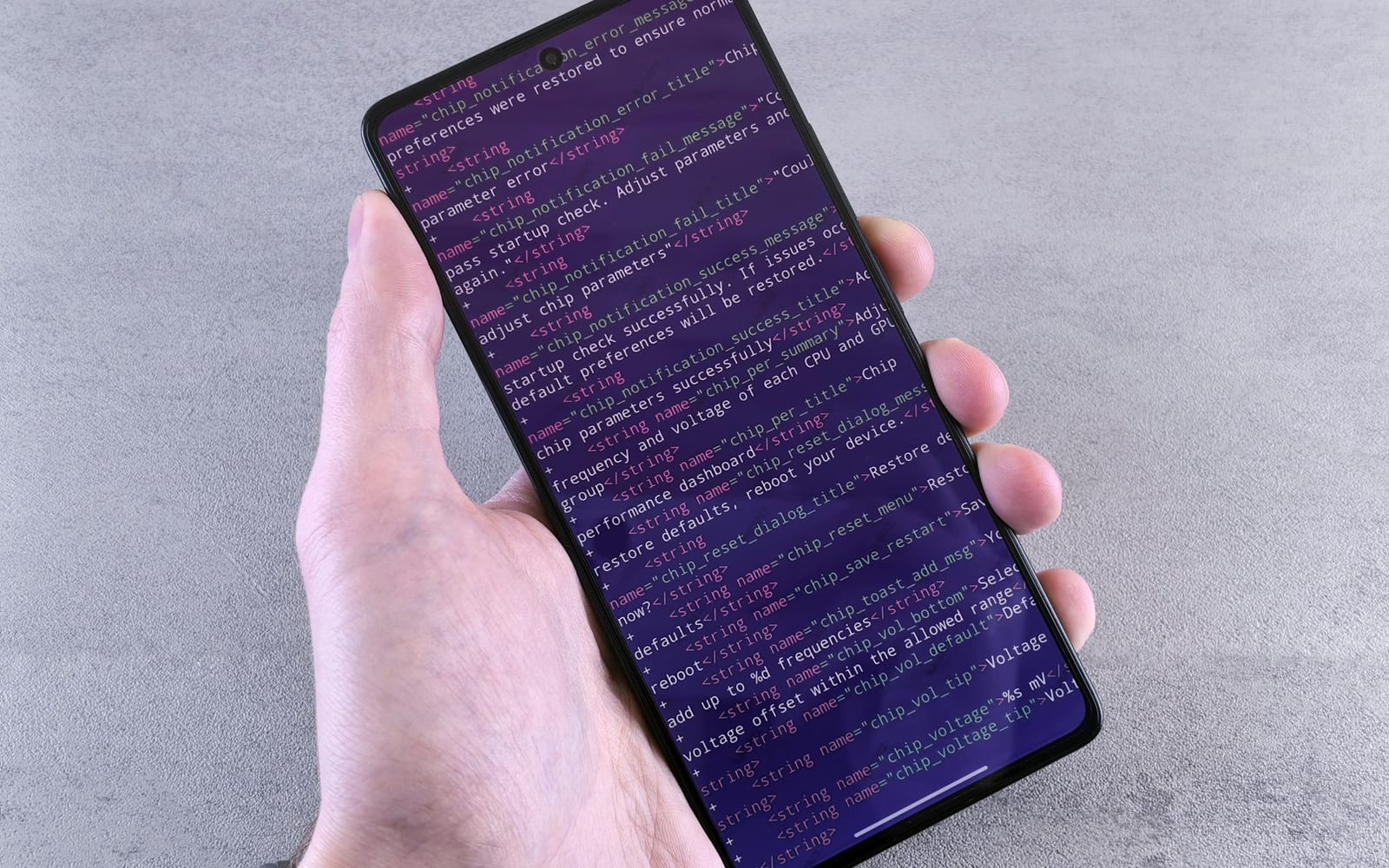
A practical Designing A Photo Backup Workflow In Modern Mobile Apps development workspace where implementation details meet device behavior.
Establishes a clean Analyzing Technical Review Feedback For Multi Flavor Android contrast between the client device container and remote dynamic configuration layers.
How do product teams ship mobile interface modifications or functional variations without going through the multi-day store review cycle and forcing users to download a massive binary update? Every mobile engineer faces this question when marketing announces a time-sensitive campaign or when product managers need to iterate quickly on user flows. The primary answer lies in separating application capabilities from application layout configurations. By delivering user interface descriptions and routing parameters dynamically from a backend API, applications can present new experiences without altering native binaries. This approach shifts the definition of a release from a rigid binary compilation to a fluid data exchange.
Yet this flexibility introduces significant engineering trade-offs. Shipping code or layout structures remotely alters the runtime environment, bringing potential risks regarding platform compliance, network dependency, and state preservation. Understanding when and how to implement dynamic feature delivery requires examining the boundary between native execution and remote configuration. Teams must balance the desire for rapid iteration against the strict platform rules governing dynamic code loading and the hard realities of variable mobile network conditions.
Clarifies the three-stage process of fetching configuration, parsing state, and rendering dynamic user interfaces.
Understanding the Mechanics of Dynamic UI Delivery
When engineers discuss updating mobile features without a new APK, they generally refer to separating the underlying rendering engine from the content it displays. The client application includes a robust set of modular UI components and layout renderers built into the native binary during compilation. These renderers understand how to display lists, cards, buttons, and text fields based on incoming instructions. When a new campaign launches, the backend serves a structured JSON payload detailing how these existing components should be arranged, styled, or sequenced.
This architecture does not mean infinite flexibility. The application cannot execute arbitrary native instructions downloaded from a remote server because modern mobile operating systems restrict runtime code execution for security reasons. Instead, the remote payload acts as a declarative blueprint. The client reads the blueprint, validates its schema against known local types, and constructs the view hierarchy dynamically. If the backend requests a component type that does not exist within the compiled binary, the renderer falls back to a safe default state rather than crashing.
Navigating Platform Policies and Security Boundaries
Operating system vendors maintain strict guidelines regarding how applications acquire and execute external code. Distributing compiled binaries or executable scripts through remote channels often violates store policies and creates severe security vulnerabilities. Therefore, a sustainable architecture relies strictly on configuration data rather than dynamic code loading. The boundary is clear. Modifying the visual flow, text content, promotional banners, or form field arrangements using remote data is generally permissible. Downloading compiled libraries, executable scripts, or native binaries at runtime to execute core logic is not.
Engineers must design their systems to remain within policy boundaries. Even when restricting updates to pure layout and flow configurations, automated store scanners can flag unusual network activity if the payload structure resembles executable injection. Maintaining transparency in API responses, ensuring payloads contain only declarative view descriptions, and avoiding opaque obfuscated strings help maintain compliance. The goal is to update the user experience without bypassing the security sandbox established by the platform vendor.
Weighing the Trade-Offs of Remote Layout Rendering
Choosing to drive mobile interfaces from remote configurations introduces distinct operational costs. While it eliminates the need for frequent binary releases, it increases client-side complexity. The application must handle scenarios where network connections fail, responses return malformed data, or payloads arrive with unexpected schema mismatches. A static binary is predictable because all assets and layouts exist locally. A dynamically rendered interface must account for loading states, empty states, slow connections, and fallback mechanisms for every single screen.
Furthermore, user experience can suffer if the transition between local and remote states lacks polish. If an application must wait for a network response before rendering a critical screen, users might experience jarring layout shifts, empty white spaces, or stuttering animations. Caching strategies become essential. Applications should store the last known valid configuration locally, rendering the cached view instantly while fetching fresh updates in the background. Testing also grows more intricate. Quality assurance teams cannot rely solely on testing a fixed binary; they must verify how the application behaves across dozens of potential backend configuration combinations.
Implementing a Robust Verification Workflow
Deploying dynamic features safely requires a rigorous testing and validation checklist. Because the client state depends heavily on external input, engineering teams must treat API responses with the same rigor applied to code compilation. Start by validating configuration schemas rigorously on the client before attempting to render any dynamic view. If a required field is missing or an unknown component identifier appears, the client should gracefully degrade to a stable local fallback instead of triggering a fatal runtime exception.
Next, test the application under adverse network conditions. Simulate high latency, intermittent packet loss, and complete offline states to ensure the caching layer functions correctly. Configuration values should be reproducible and separated cleanly from machine-specific debugging states. Verify that local persistence layers correctly handle state restoration when the application is backgrounded and resumed while processing a dynamic layout update. Finally, ensure that analytics and error reporting track parsing failures, allowing the team to identify malformed remote payloads before they impact a wide user base.
Practical Takeaways for Mobile Engineering Teams
Shipping features without a full application binary release is a powerful tool for accelerating product iteration, but it is not a silver bullet. The safest implementation pattern involves updating flow arrangements, UI compositions, and promotional content through declarative JSON payloads while keeping core capabilities anchored in compiled native code. Respect platform policies by avoiding any mechanism that resembles remote code execution. Prioritize robust error handling, local caching, and graceful degradation to protect the user experience when network conditions deteriorate. By treating remote configurations with the same architectural discipline applied to backend APIs, teams can achieve rapid flexibility without sacrificing stability or compliance.
Continue Exploring
You Might Also Like
Executing a Smooth Technical Rollout
Learn how to orchestrate a smooth software release by defining clear ownership, explicit operational calendars, and resilient verification steps for backend and frontend updates.

Debugging Broken Links and Deployment Flow Mismatches
An exploration of how deployment validation, cutoff date logic, and testing schedules impact system integrity and link accessibility in production environments.

Mastering List to String Conversion in Mobile Development
An in-depth guide on handling list to string conversion, managing Android lifecycles, and avoiding memory leaks during state transformation.