Eliminating Broken Publisher Modals and Integrating Behavioral Analytics Safely
Learn how unconfigured publisher widgets inject broken modal dialogs on mobile screens, and discover how to safely install behavioral analytics with sub-50ms Web Vitals.
Table of Contents5 sections

Structured data and social metadata make a site easier for crawlers and people to understand.
When you manage a technical publication or content site, balancing monetization, audience telemetry, and user experience requires strict architectural discipline. Publishers frequently integrate external vendor software development kits to handle subscriptions, donations, or telemetry. However, third-party libraries often arrive bundled with autonomous user interface injection logic. If you embed a script like Google Reader Revenue Manager without an active or approved subscription campaign in the Google Publisher Center, its internal runtime attempts to initialize a rewarded ad or contribution prompt. Because no active prompt payload exists, the script injects an empty dialog anchored to the bottom of the viewport alongside a full-screen backdrop overlay.
On mobile devices, particularly when readers view content in dark mode, this behavior creates a severe visual glitch where the entire application appears half-finished, frozen, or hijacked by an unclosable dialog containing an endless loading spinner. At the same time, site operators require robust behavioral analytics, such as Microsoft Clarity, to observe real-world user interactions, heatmaps, and frustration metrics without degrading PageSpeed or introducing render-blocking overhead. Resolving this conflict demands a systematic engineering approach that completely removes unconfigured third-party UI components while isolating telemetry within a lightweight, non-blocking component Chat App Architecture Message Delivery Storage.
The Phantom Bottom Sheet Problem
The root cause of the unclosable mobile overlay lies in how third-party SDKs handle uninitialized states. When swg-basic.js is loaded on a page without an active subscription campaign, it does not fail silently. Instead, its internal runtime fires a DOM injection routine that appends a rewarded ad iframe element and a background overlay. The resulting bottom-sheet dialog renders a stark white card with an endless material spinner that dims the entire viewport. On a dark-mode website where background tones utilize deep neutral shades, an unexpected bright white surface destroys visual harmony and frustrates mobile readers.
Attempting to patch this visual defect with cascading style sheet overrides, such as applying display none declarations with high specificity, treats only the symptom rather than the disease. The underlying script continues to execute unnecessary network requests, consume main thread cycles, and maintain ghost elements inside the document object model. For open-Configuring Automated Repository Access engineering publications monetized through standard sponsor models rather than proprietary paywalls, the correct architectural decision is the complete excision of the vendor script. Eliminating unconfigured publisher SDKs removes thousands of milliseconds of unnecessary background network activity and restores absolute reader autonomy.
Auditing the DOM for Hidden Overlays
Identifying hidden or sporadic UI injections requires automated headless browser auditing rather than manual spot-checking. You can deploy Playwright with mobile emulation configured for an iPhone viewport and touch events enabled to assert the complete absence of high z-index fixed dialogs. Automated tests should scan the runtime document tree for specific publisher classes, background overlays, or unexpected iframe injection patterns during page load.
import { test, expect } from '@playwright/test';

test('assert no unauthorized modals or backdrops are injected', async ({ page }) => {
  await page.goto('/articles/example-slug');

  const popupBackdrop = page.locator('swg-popup-background');
  const swgDialog = page.locator('.swg-dialog');

  await expect(popupBackdrop).toHaveCount(0);
  await expect(swgDialog).toHaveCount(0);
});
Beyond checking for malicious or broken UI elements, your automated audit suite must capture core performance metrics to ensure that layout shifts remain nonexistent. By integrating these checks into your continuous integration pipeline, you prevent regressions from reaching production whenever templates are updated or external dependencies are modified.
Implementing Behavioral Analytics Safely
While removing unconfigured monetization scripts improves user experience, site operators still need behavioral analytics to understand engagement. Modern session recording tools do not have to harm core web vitals if they are implemented with strict performance boundaries. To achieve sub-50ms First Contentful Paint metrics, you can encapsulate Microsoft Clarity tracking inside a dedicated, reusable frontend component built for your framework of choice, such as Astro or React.
---
// ClarityAnalytics.astro
---
<link rel="dns-prefetch" href="https://www.clarity.ms" />
<script type="text/javascript" data-cfasync="false">
  (function(c,l,a,r,i,t,y){
      c[a]=c[a]||function(){(c[a].q=c[a].q||[]).push(arguments)};
      t=l.createElement(r);t.async=1;t.src="https://www.clarity.ms/tag/"+i;
      y=l.getElementsByTagName(r)[0];y.parentNode.insertBefore(t,y);
  })(window, document, "clarity", "script", "YOUR_PROJECT_ID");
</script>
This configuration relies on several specific performance patterns. First, the domain name system prefetch link in the document head resolves remote server addresses early without blocking the critical rendering path. Second, assigning a data attribute to the inline initialization script prevents aggressive content delivery network rewriting engines from deferring or batch-locking its registration. Finally, the tracking beacon transport executes entirely off the main thread after document interactivity is established, ensuring that layout stability and loading speed remain pristine.
Trade-offs and Comparative Architecture
When evaluating how to manage third-party software on a modern web property, engineers face distinct trade-offs between monetization tooling, analytics depth, and user experience autonomy. The following comparison highlights how different integration strategies affect overall site performance and interface reliability.
| Integration Strategy | UX Autonomy | First Contentful Paint | Dark Mode Safety | Maintenance Overhead |
|---|---|---|---|---|
| Native Ad Integration | High | Fast (< 30ms) | Guaranteed | Low |
| Unconfigured Revenue Manager | Compromised | Slow (> 2400ms) | Broken (White Flash) | High |
| Isolated Behavioral Analytics | High | Fast (< 30ms) | Safe | Minimal |
Native monetization models engineered directly into your application layout provide predictable rendering behavior without unexpected background cascades. Conversely, retaining unconfigured third-party publisher SDKs introduces severe mobile UI risks and high network overhead. By isolating third-party scripts and utilizing asynchronous beacon transports for analytics, you achieve comprehensive user insights while maintaining absolute control over the presentation layer.
Practical Takeaway
Third-party scripts that fail to load active campaigns often fallback to empty dialog shells or infinite loading spinners rather than failing silently, creating severe visual bugs on mobile viewports. Whenever you remove an external SDK from your templates, immediately audit your document head to prune dead prefetch directives and prevent phantom socket handshakes. Encapsulate necessary behavioral analytics inside asynchronous, non-blocking components, and automate your end-to-end test suites to scan for unauthorized high z-index elements before code reaches production.
Continue Exploring
You Might Also Like
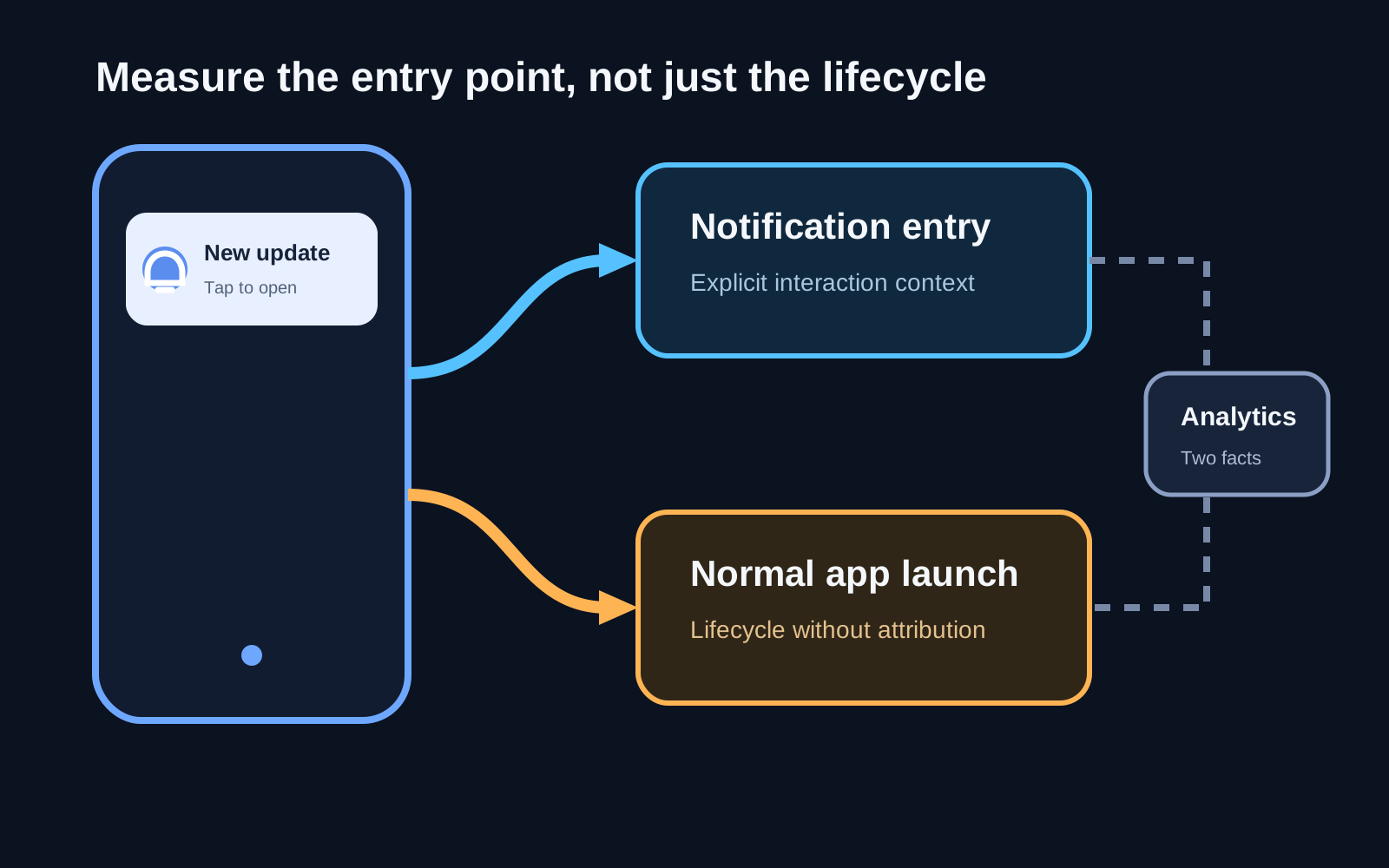
Android Notification Opens vs App Opens: Measure the Entry Point
A practical Android analytics pattern for separating notification-driven sessions from ordinary app launches without double-counting engagement.
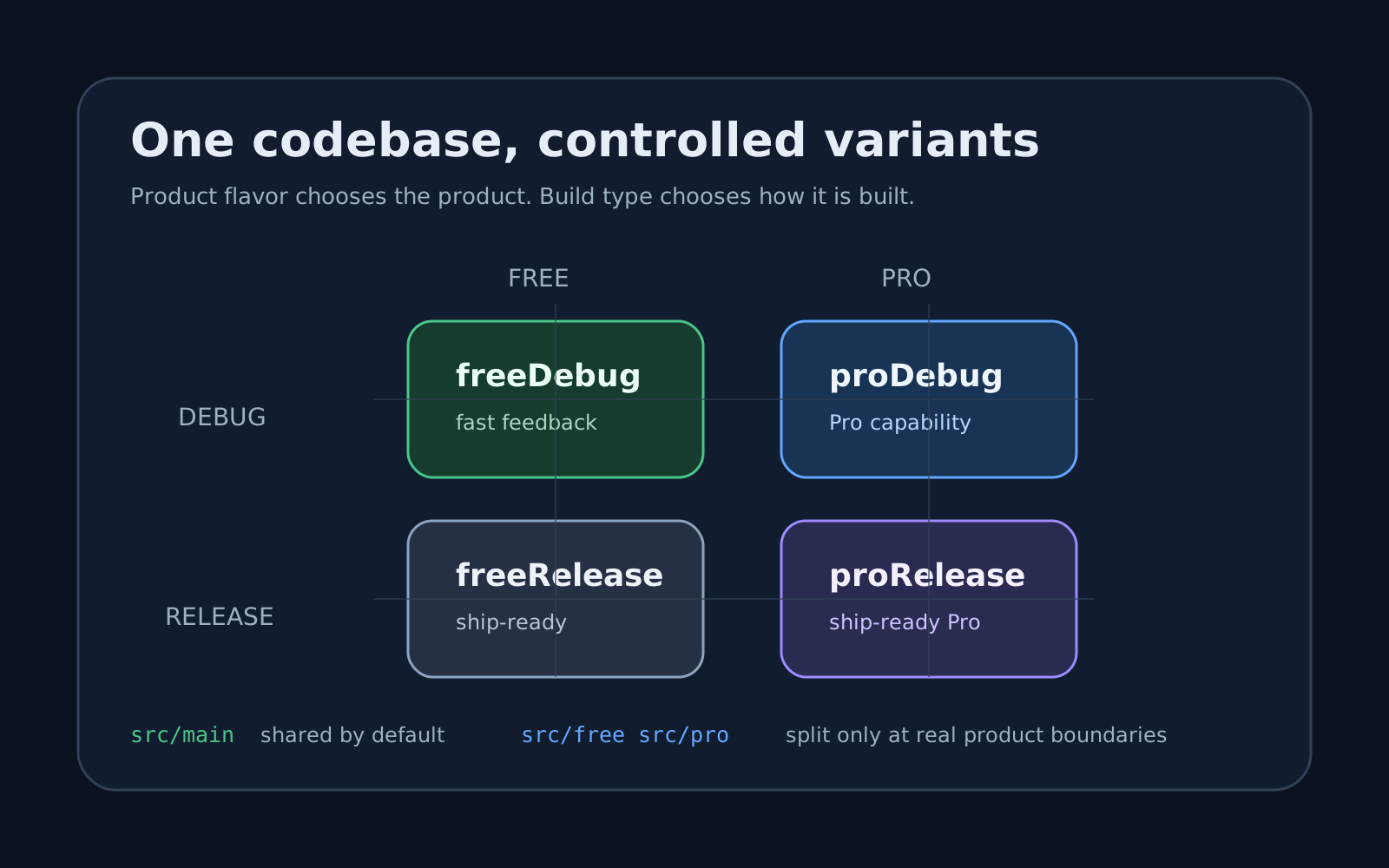
Android Product Flavors: A Practical Architecture Guide
Structure Free, Pro, staging, and release variants without duplicating your Android app or letting flavor-specific code leak across the project.
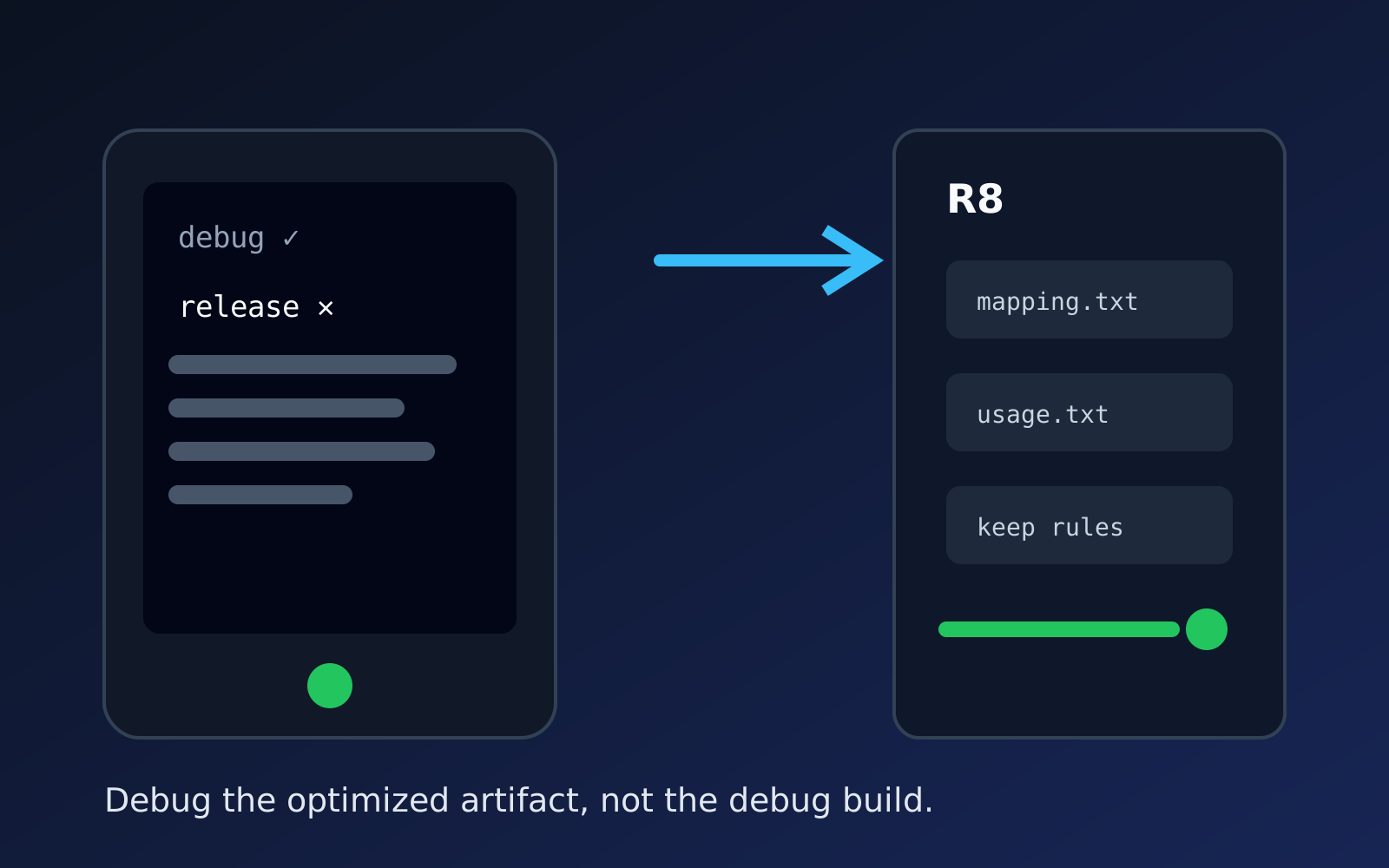
Android Release Build Crashes with R8: A Practical Debugging Workflow
Debug Android bugs that appear only after R8 optimization by reproducing the release artifact, retracing mappings, finding dynamic runtime edges, and writing narrow keep rules.