How to Build a Secure In-App APK Update Flow on Android
Design a reliable off-Play Android update flow with signing continuity, version checks, package verification, user consent, and observable install states.
Table of Contents14 sections
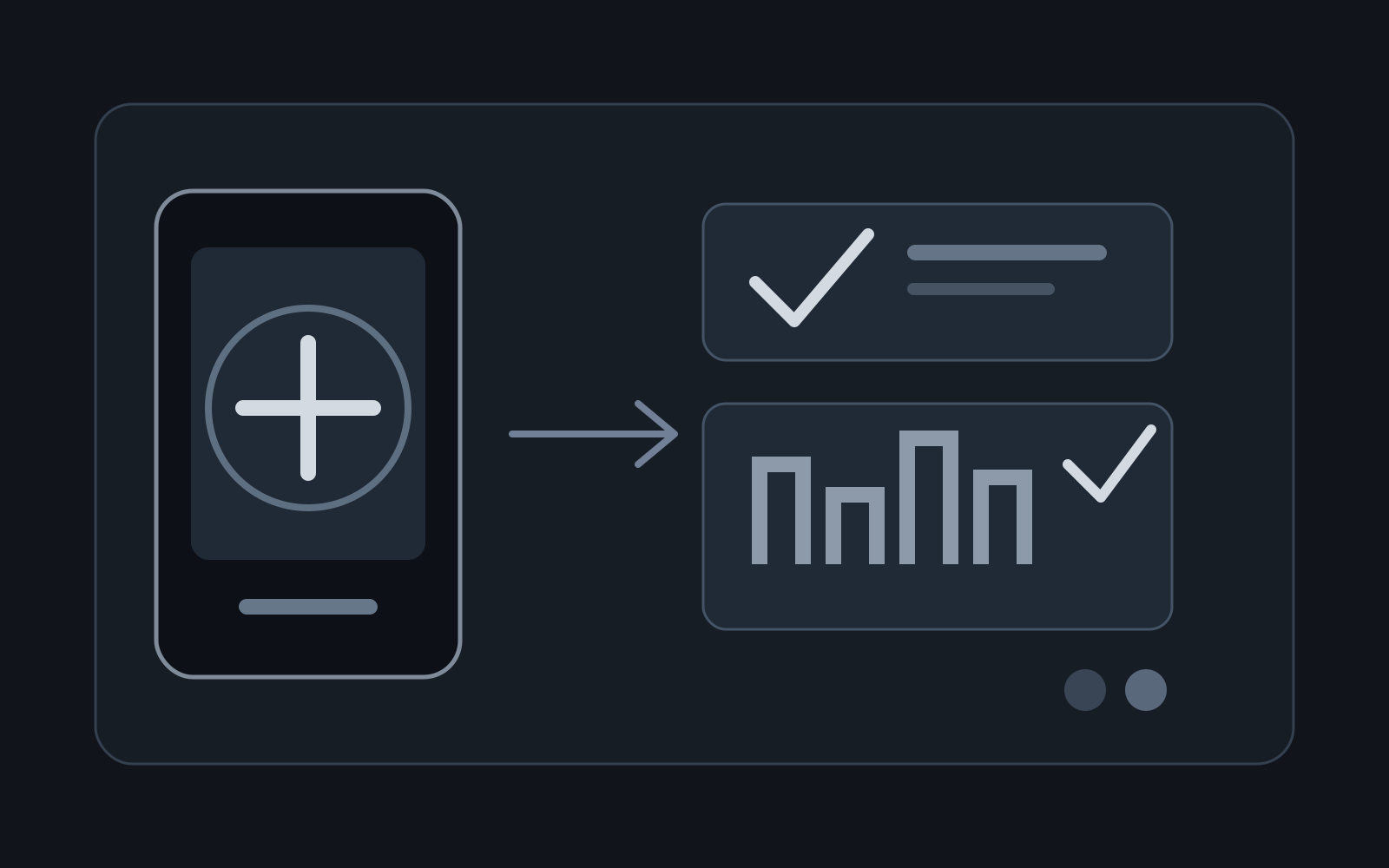
An in-app APK updater should not be designed as “download a file and open it.” The durable architecture is a small release protocol: discover a newer trusted release, verify that the artifact belongs to the app you intend to update, stage it safely, hand installation to Android, and observe the result.
This pattern matters for enterprise, private, kiosk, and other off-Play Android deployments. Android explicitly supports distributing signed APKs through a website or private server, while the platform still controls whether a source is allowed to request installation. The official Android publishing guidance is a useful reminder that distribution and installation are separate concerns.
The updater’s job is therefore not to bypass Android. It is to make every transition into Android’s installer deliberate, verifiable, and recoverable.
Start With the Update Contract
A robust updater needs a release contract before it needs UI.
At minimum, the server-side release descriptor should tell the client:
- package name;
- monotonically increasing
versionCode; - human-readable
versionName; - artifact URL;
- artifact size;
- cryptographic digest such as SHA-256;
- whether the release is optional or mandatory;
- minimum supported app version if forced upgrades exist;
- release notes or a reference to them.
Keep this descriptor independent from the APK itself. The client can then decide whether an update is relevant before downloading a large binary.
A simple domain model might look like this:
data class AppRelease(
    val packageName: String,
    val versionCode: Long,
    val versionName: String,
    val apkUrl: String,
    val sha256: String,
    val bytes: Long,
    val required: Boolean,
)
Do not use versionName to decide ordering. It is presentation data. The update decision should be based on the numeric version code and your rollout policy.
Signing Continuity Is the Root of Trust
Android requires APKs to be digitally signed before installation or update. More importantly, an update must preserve the application’s signing identity. Losing control of the signing key for a self-managed distribution channel can mean losing the ability to ship compatible updates.
The Android app-signing documentation explains why signing keys are not just a release-build detail: Android uses the certificate to establish application identity across updates.
That leads to a practical rule:
Treat signing-key custody as part of the updater architecture, not as a CI afterthought.
For an enterprise pipeline, document which key signs production APKs, where signing happens, who can trigger it, how backups are protected, and how certificate fingerprints are verified in CI. Never ship private signing material inside the application.
The client should also reject a release descriptor for another package name before it downloads anything.
Separate Discovery, Download, Verification, and Installation
A common implementation mistake is putting the entire updater inside one Activity or one coroutine:
check -> download -> launch installer -> hope
That makes retries ambiguous. If the process dies, which step should resume? If the network fails after the file is complete, should the APK be downloaded again? If verification fails, should installation still be offered?
Model the updater as explicit states instead:
Idle
Checking
UpdateAvailable
Downloading
Verifying
ReadyToInstall
AwaitingUserAction
Installing
Installed
Failed
The exact classes are less important than preserving the boundaries.
Network failures belong to discovery or download. Digest mismatches belong to verification. User-consent requirements belong to installation. Treating all of them as UpdateError throws away the information you need for safe retry behavior.
This is the same architectural principle behind truthful UI state in partial-success Android ViewModels: the UI should represent what actually happened, not collapse several independent operations into one success flag.
Verify the Artifact Before Installation
HTTPS protects the transport path, but the updater should still verify the artifact it received against trusted release metadata.
After download:
- confirm the byte count when known;
- compute SHA-256 over the completed file;
- compare it with the expected digest;
- inspect the APK package identity before presenting installation;
- reject stale or unexpected versions.
The digest is not a replacement for Android’s APK signature verification. It solves a different problem: confirming that the bytes downloaded are the exact artifact your release service advertised.
The package signature remains Android’s application-identity boundary.
This layered approach also makes failures diagnosable. “Download hash mismatch” is actionable. “Install failed” is much less specific.
Treat Install Permission as Runtime State
On Android 8.0 and later, trust for installing apps from outside first-party stores is granted per source. The platform exposes PackageManager.canRequestPackageInstalls() so an installer can check whether it is currently allowed to request package installation.
The PackageManager documentation explicitly recommends checking this state because users can change it.
Do not assume that permission granted during onboarding still exists months later.
A safe flow is:
ReadyToInstall
  -> can request installs?
      yes -> stage/commit install
      no  -> explain why permission is needed
             -> open system settings
             -> re-check when the app resumes
The important part is the re-check. Returning from Settings is not proof that the user enabled anything.
Avoid dark patterns around this permission. The user should understand which application is requesting installation and why.
Prefer PackageInstaller for a Controlled Install Session
Older Android examples often launch ACTION_INSTALL_PACKAGE, but that intent is deprecated from API 29 in favor of PackageInstaller.
PackageInstaller gives an updater an explicit session model. A client creates a session, writes the APK payload into it, and commits the session with an IntentSender for status.
Conceptually:
val params = PackageInstaller.SessionParams(
    PackageInstaller.SessionParams.MODE_FULL_INSTALL
).apply {
    setAppPackageName(expectedPackageName)
}

val sessionId = packageInstaller.createSession(params)

packageInstaller.openSession(sessionId).use { session ->
    session.openWrite("base.apk", 0, apk.length()).use { output ->
        apk.inputStream().use { input ->
            input.copyTo(output)
            session.fsync(output)
        }
    }

    session.commit(statusIntentSender)
}
Production code needs lifecycle handling, error mapping, storage cleanup, and API-level behavior around user action. But the architectural advantage is already visible: installation becomes an observable platform session instead of an opaque fire-and-forget intent.
The SessionParams API also lets you declare the expected package name. If staged APKs do not match it, installation fails.
User Action Is a Normal State, Not an Error
A non-privileged updater should expect Android to require user interaction.
Do not report “installation failed” merely because the platform asks for confirmation. Represent that transition explicitly as AwaitingUserAction, surface the system-provided intent when required, and continue observing the final installer result.
This distinction matters for telemetry too:
download_success
verification_success
install_session_created
user_action_required
install_success
install_failure
Those events tell a coherent story. A single update_failed metric does not.
For managed-device environments, device-owner or enterprise policy may change what installation can do silently. Keep that as a separate capability layer rather than contaminating the ordinary consumer/off-Play flow with assumptions about privileged access.
Make Retry Semantics Step-Specific
Retries should repeat the smallest failed operation.
If release discovery times out, retry discovery.
If a resumable download fails, continue or restart the download according to your transport contract.
If the hash is wrong, delete the artifact and download again. Never retry installation with bytes that failed integrity verification.
If the user declined installation, preserve the downloaded verified artifact only as long as your storage and freshness policy permits.
If Android rejects the package because its signing identity or package name is wrong, repeated installation attempts will not repair the release. Escalate that as a release-pipeline defect.
This is why explicit updater states pay off: each state has a different safe recovery action.
Keep the APK Out of Permanent App State
Downloaded update artifacts are temporary release material.
Store them in an app-controlled location, clean obsolete versions, and avoid leaving a pile of historical APKs after successful or abandoned updates. Your release descriptor should remain the source of truth for what is current; a leftover file should never become evidence that a release is valid.
Also assume the process can die at any point. On restart, reconstruct state from durable facts:
- what version is currently installed;
- what release the server currently advertises;
- whether a complete artifact exists;
- whether that artifact still matches the expected digest.
Do not try to serialize every transient coroutine state and blindly restore it.
Design Forced Updates Carefully
Mandatory updates are product policy, not merely updater logic.
A forced update can be justified when an old client is no longer compatible with the backend or has a critical security problem. It is much harder to justify for routine feature releases.
If you support forced updates, define:
- which installed versions are blocked;
- what happens when the device is offline;
- whether critical workflows can finish before blocking;
- how support can recover devices that cannot install the new APK;
- how rollout is stopped when the new release is bad.
The updater should consume this policy. It should not invent it.
A staged rollout is still useful outside an app store. Your release service can assign devices or cohorts to a release while keeping the installation protocol identical.
Build Observability Around the State Machine
An updater is difficult to debug when the only report is “it didn’t update.”
Record enough non-sensitive telemetry to answer:
- installed version and target version;
- discovery result;
- download result and duration;
- verification result;
- installer session result;
- whether user action was required;
- stable failure category.
Do not log signed URLs, credentials, private filesystem paths, or sensitive server responses.
For internal Android fleets, this becomes especially valuable: you can distinguish a bad artifact from network instability, denied install permission, signing mismatch, or user cancellation without remote-debugging every device.
A Practical Release Checklist
Before publishing an off-Play APK update, verify the release pipeline and client contract together.
| Gate | What must be true |
|---|---|
| Identity | Package name matches the installed application |
| Version | versionCode is valid for the intended upgrade |
| Signing | Release uses the expected production signing identity |
| Transport | Artifact is fetched over an authenticated HTTPS endpoint |
| Integrity | Downloaded bytes match the advertised SHA-256 |
| Permission | Install-source permission is checked at the moment it is needed |
| Installation | PackageInstaller status is observed to a terminal result |
| Recovery | Failed steps have explicit retry or escalation behavior |
| Cleanup | Obsolete APKs and abandoned sessions are removed |
| Rollout | The release can be paused without shipping another client |
The Android release-preparation guidance also recommends testing the actual release build before distribution. That matters even more for a private updater: the delivery mechanism cannot compensate for a release artifact that was never tested in production-like form.
The Architecture to Keep
The durable mental model is:
release metadata
      |
      v
eligibility check
      |
      v
download -> integrity verification
      |
      v
package/signing expectations
      |
      v
PackageInstaller session
      |
      v
user/system decision
      |
      v
terminal install result
Each arrow is a boundary you can test, observe, and retry deliberately.
A secure Android updater is not defined by how automatically it can install an APK. It is defined by how confidently it can prove that the right release reached the right app through the platform’s intended installation path.
That architecture survives server changes, UI redesigns, and Android-version differences much better than a single “Update now” coroutine ever will.
Continue Exploring
You Might Also Like
Android ABI Filters: How to Choose Architectures Without Breaking Devices
A practical guide to Android ABI filters, native library packaging, 32-bit and 64-bit support, and testing architecture choices across real devices.
Why Android Push Notifications Duplicate and How to Fix Them
A practical debugging workflow for duplicate Android notifications, covering FCM payload ownership, stable notification IDs, PendingIntent identity, and idempotent handling.
How to Handle Partial Success in Android ViewModels
A practical pattern for Android mutations that succeed before a follow-up refresh fails, without lying to the user or turning Compose callbacks into orchestration code.