Writing Technical README Instructions for Resilient Android Projects
A comprehensive guide on creating technical README instructions that promote resiliency, ease of setup, and long-term maintainability for Android software projects.
Table of Contents5 sections

A visual representation of a README file helps developers quickly grasp the project’s structure. Including technical instructions ensures the Android project remains resilient and accessible to new contributors.
The Foundation of a Great README: Project Architecture
When developers write technical README instructions, they often focus primarily on markdown formatting and language clarity. While these aspects improve readability, the most critical factor for effective documentation is the project’s underlying architecture. A complex, brittle project inevitably requires a convoluted, error-prone README. Conversely, a resilient project with clear boundaries allows for streamlined, easy-to-follow instructions that guide the user gracefully.
The primary objective when preparing an Android project for public distribution is ensuring highly reproducible configuration. This requires strictly separating machine-specific values from shared project settings. When a new developer clones a repository, they should not encounter build errors caused by missing local configuration files or hardcoded paths that only exist on the original author’s machine.
Instead, projects should be purposefully designed to compile and run with minimal setup. The README should act as a progressive guide for enhancing the base project with capabilities, rather than a troubleshooting manual for getting the core to compile. By prioritizing an architecture that gracefully handles missing configurations, you drastically reduce friction for new contributors. This transforms the README from a frustrating prerequisite into an empowering tool.
For a reusable structure that keeps setup decisions visible, compare the RayLabs guide to reusable templates and documentation.
Decoupling Dependencies: Making External Services Optional
A classic example of project architecture impacting documentation involves integrating third-party services like Firebase. A common pitfall is configuring the build system to strictly require the configuration file. When a developer clones the repository and syncs the build scripts, the build immediately fails because this file, containing sensitive identifiers, is excluded from version control.
This creates a fatal build scenario. While it might seem like a minor inconvenience, it creates a significant roadblock for new contributors. The README must now front-load lengthy instructions on how to create an external project, generate configuration files, and place them correctly before the developer can even verify that the core application compiles.
To resolve this issue, configure the build system to make such dependencies entirely optional. Rather than unconditionally applying the external service plugin, the build script can check for the existence of the configuration file first.
// Practical Example: Conditional plugin application
def externalServicesConfigurationFile = file('service-config.json')
if (externalServicesConfigurationFile.exists()) {
    apply plugin: 'com.example.external.services'
    // Configure additional service dependencies here
} else {
    logger.warn('Configuration file not found. External features will be disabled during this build.')
}
This decoupling strategy at the build level allows the README to start with a remarkably simple setup section. Instructions for setting up external services can then be logically moved to an optional configuration section, allowing developers to explore the core functionality of the application without being forced to set up external services immediately.
Writing Safe Code for Optional Services
Making dependencies optional at the build level is only the first part of the solution. The application code must also safely handle the potential absence of these services. If the build configuration gracefully bypasses the setup, but the code attempts to initialize external analytics unconditionally on startup, the application will crash, rendering the build-level decoupling useless.
Writing safe code for optional services involves implementing robust architectural patterns, such as interface segregation and dependency injection. Instead of tightly coupling application logic to specific external kits, define abstract interfaces that describe required functionality.
For instance, consider an application that logs analytical events. Rather than calling the external service methods directly throughout the codebase, you create a generic interface to handle the logging behavior:
interface AnalyticsLogger {
    fun logEvent(eventName: String, parameters: Map<String, String>)
}

class RealAnalyticsLogger : AnalyticsLogger {
    override fun logEvent(eventName: String, parameters: Map<String, String>) {
        // Implementation calling the actual third-party service
    }
}

class NoOpAnalyticsLogger : AnalyticsLogger {
    override fun logEvent(eventName: String, parameters: Map<String, String>) {
        // Safely ignore or log to the local debug console
        println("Debug Event Triggered: $eventName")
    }
}
During application initialization, the dependency injection graph or a dedicated factory class determines which implementation to provide based on the availability of the required services. If the application detects that it was built without the necessary configuration files, it automatically injects the fallback implementation.
This interface-driven approach ensures that the application remains functional and stable even when external dependencies are missing. It also makes the codebase significantly easier to test, as you can easily substitute mock implementations during unit testing. In the context of the README, this means you can confidently assure users that the application is perfectly safe to run in a minimal configuration state, further lowering the barrier to entry and simplifying the documentation.
Defining State and Expected UI Behavior
A comprehensive technical README must also serve as a definitive guide to the application’s intended behavior, particularly concerning data management and user interface states. When developers are reviewing or extending the codebase, they critically need to understand how the application is expected to respond to various normal and abnormal conditions.
The documentation should clearly define the application’s primary source of truth. Is data primarily fetched from a remote application programming interface on every screen load, or is the application heavily reliant on a local database cache for offline support? The README should explicitly explain the cache invalidation rules and the consistency behavior expected between the local data store and the remote server.
Furthermore, the README should meticulously outline the expected user interface behavior across all possible data states: the initial loading state, the empty data state, the successful data retrieval state, and various failure states. This documentation provides a clear contract for what the end user should experience and what developers need to properly implement or maintain.
Testing and subsequently documenting these specific scenarios are absolutely crucial for a resilient project. The README should specify exactly how a developer can manually trigger and verify empty data states, how the system handles duplicate data ingestion, the process for database migrations, and the expected behavior during partial-failure scenarios. By explicitly detailing these complex edge cases in the documentation, you provide a clear roadmap for future contributors and ensure that the application maintains a high standard of quality.
Verifying the Workflow in a Clean Environment
The final, and arguably most important, step in writing technical README instructions is rigorously verifying the documented workflow from a completely clean environment. A frequent mistake developers make is writing documentation on a development machine that has already been extensively configured over many months. This leads directly to scenarios where implicit dependencies mask underlying issues.
To ensure the README is truly accurate, the entire setup process must be tested on a pristine system. This demanding process involves manually clearing build caches, removing local configuration properties, and ensuring that no residual state from previous successful builds influences the test outcome.
During this verification phase, it is essential to follow the README instructions exactly as they are written, step by step. This strict verification process will quickly highlight any missing steps, assumed prerequisite knowledge, or hardcoded paths that need to be addressed in the documentation.
Additionally, this comprehensive verification phase should include checking the application’s core lifecycle behavior, its ability to successfully restore state, and its overall compatibility across all officially supported platform versions. Does the application recover gracefully when the operating system reclaims its background memory? Does the user interface still render correctly and remain fully functional on much older, less capable versions of the operating system?
By rigorously testing the documentation against a genuinely clean environment, you definitively guarantee that the README is a reliable, trustworthy, and complete resource. This final, critical step transforms the documentation from a theoretical set of guidelines into a proven, practical manual, strongly ensuring that anyone who clones the repository can successfully build, run, and ultimately understand the project without unnecessary frustration.
Continue Exploring
You Might Also Like

Structuring Reusable Templates and Documentation
Learn how to structure reproducible templates and README files for cross-functional developer tools and multi-platform projects.
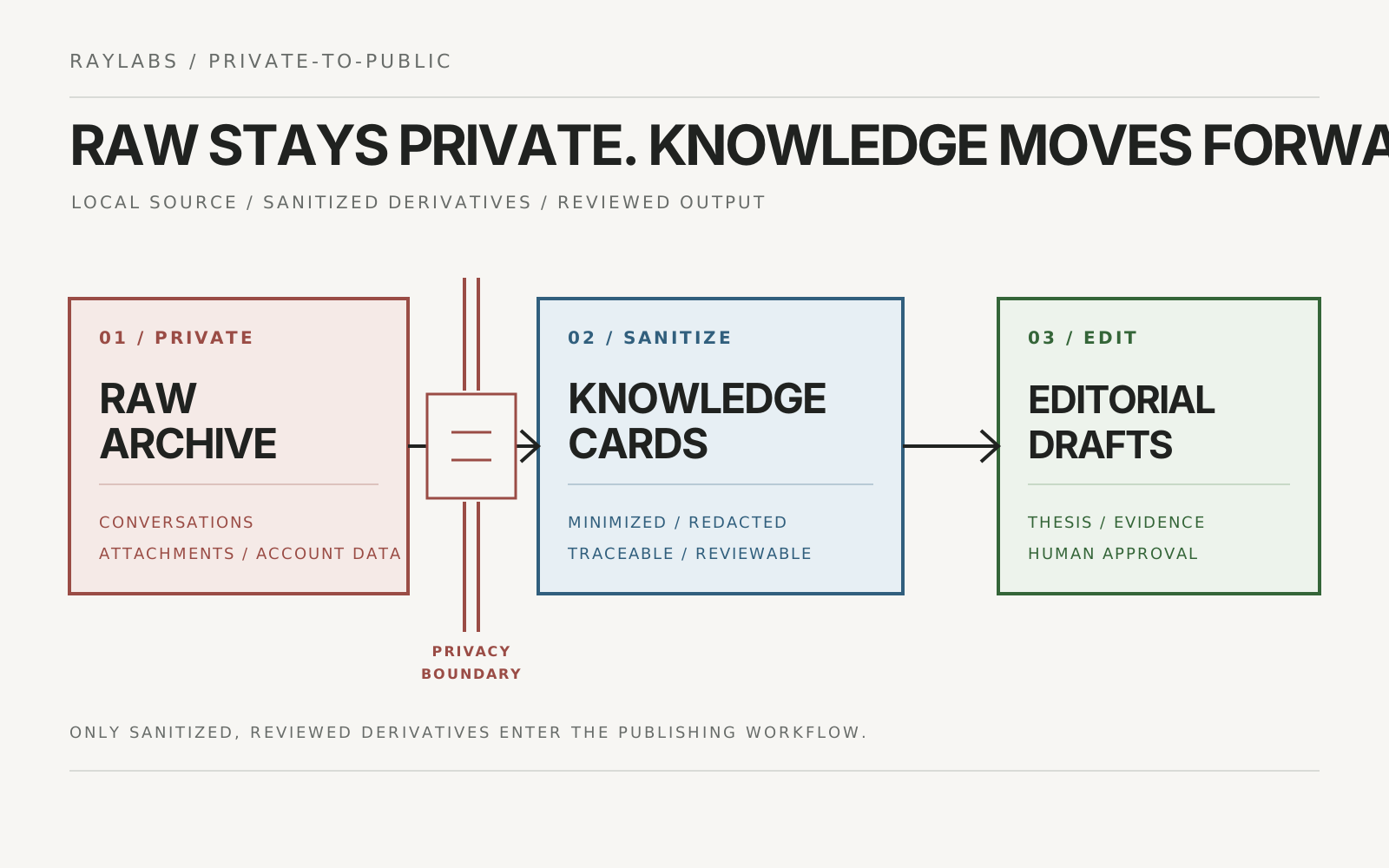
ChatGPT Export: Privacy-First Knowledge Cards
Turn a ChatGPT export into reusable technical notes with a local-first workflow that keeps raw conversations, attachments, and publishing inputs separate.

Mastering List to String Conversion in Mobile Development
An in-depth guide on handling list to string conversion, managing Android lifecycles, and avoiding memory leaks during state transformation.