MySQL Local Development Setup Guide
A verification-first guide to installing MySQL 8.4 locally, starting the service, creating a least-privilege development user, and running a basic validation test.
Table of Contents6 sections
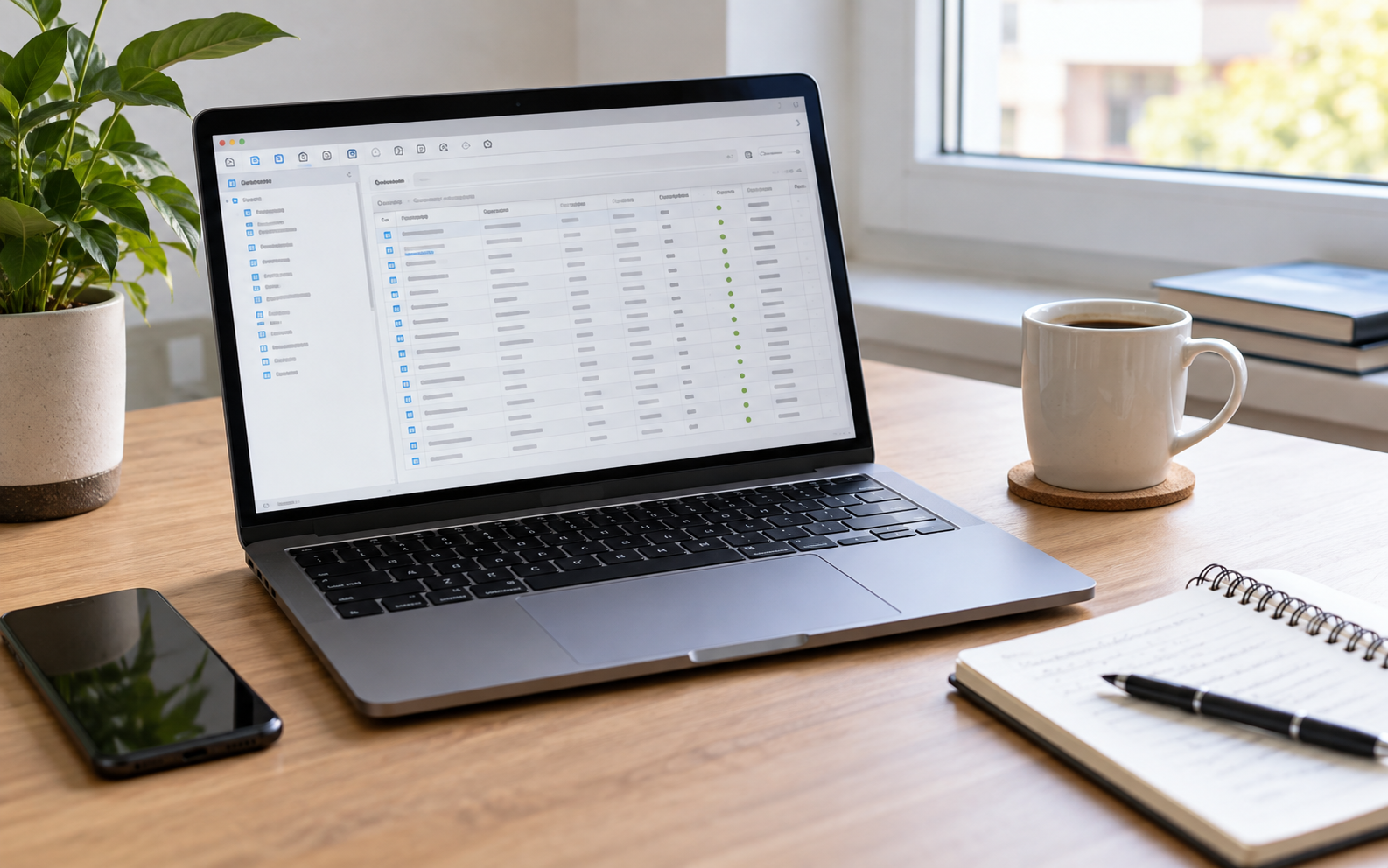
A local database workspace makes setup, credentials, and repeatable checks visible.
Getting a relational database running on a local machine is often treated as a simple click-through exercise, yet many developers find themselves stalled when the installer finishes and the service refuses to answer. The primary challenge of Setting Up A Development Environment up a local database is not the initial file extraction. It is confirming that the background daemon is actively listening, that authentication mechanisms are understood, and that a dedicated application user can connect securely without relying on root privileges. Without these checks, connection errors surface immediately when building the first application model.
This guide covers the process of installing MySQL 8.4, starting the service across common operating systems, establishing a least-privilege development user, and executing a complete verification test. By treating the setup as an observable environment with clear checkpoints, you can avoid common pitfalls and ensure your local database behaves predictably.
Choosing the Installation Method
Before running any commands, you need to select the correct distribution package for your operating system. For macOS users, the Homebrew package manager provides a straightforward way to pull the official community server. Linux users typically rely on their distribution package manager or the official MySQL APT/YUM repositories to fetch version 8.4. Windows users generally download the community installer MSI package or use the winget command-line tool.
Regardless of the installation route, note that modern MySQL releases enforce secure defaults out of the box. The server will initialize with a temporary password for the root user, and anonymous accounts are disabled by default. Keeping track of this initial output is essential because missing the temporary password requires a manual recovery sequence before you can perform any administrative actions.
Starting and Verifying the Database Service
Once the installation completes, the next step is launching the database daemon and verifying that it is running. Installation packages rarely start the server automatically for security reasons. On macOS with Homebrew, you manage the service using the built-in service manager. On systemd-based Linux distributions, you use systemctl. On Windows, the MySQL installer configures the server to run as a Windows service.
To start the service on macOS, run the following command in your terminal.
brew services start mysql
To check if the service is running on a Linux system, use the systemctl utility.
sudo systemctl status mysql
If the service is active, you should see an indicator confirming that the daemon is running and listening on the default port of 3306. If the service fails to start, examine the error log located in your data directory. Common startup failures stem from permission mismatches on the data folder or an existing instance occupying port 3306.
Creating a Least-Privilege Development User
Connecting to your local database using the administrative root account is convenient during initial testing, but it creates bad habits that complicate later deployments. Application code should always connect using a dedicated user account with privileges restricted only to the development database.
First, connect to the local server using the administrative account. If you are using the temporary password generated during installation, provide it when prompted.
mysql -u root -p
Once connected to the MySQL prompt, create a dedicated database for your project and a local user account. In MySQL 8.4, the preferred authentication plugin is caching_sha2_password, which is enabled by default.
CREATE DATABASE dev_app_db;
CREATE USER 'dev_user'@'localhost' IDENTIFIED BY 'strong_local_password_here';
GRANT ALL PRIVILEGES ON dev_app_db.* TO 'dev_user'@'localhost';
FLUSH PRIVILEGES;
EXIT;
Using ‘localhost’ as the host restriction ensures that this user can only connect from the local machine, preventing accidental network exposure. If your development Designing A Photo Backup Workflow In involves containers where the application runs in a separate network namespace, you may need to adjust the host specifier to match the container subnet, though keeping it strictly local is safest for standard laptop development.
Running a Create and Read Verification Test
With the service running and your development user created, the final step is to verify end-to-end functionality. Log back into the database using your new credentials to confirm that authentication succeeds and that you can perform basic write and read operations.
mysql -u dev_user -p -h localhost dev_app_db
Enter the password you assigned during the user creation step. Once inside the mysql shell connected to your development database, create a simple table, insert a test record, and query it back to verify data persistence.
CREATE TABLE items (
    id INT AUTO_INCREMENT PRIMARY KEY,
    name VARCHAR(100) NOT NULL,
    created_at TIMESTAMP DEFAULT CURRENT_TIMESTAMP
);

INSERT INTO items (name) VALUES ('verification test record');

SELECT * FROM items;
If the query returns the inserted row with an auto-generated identifier and timestamp, your local development environment is fully functional. You can now configure your application framework to connect using the dev_user credentials and the dev_app_db database name.
Distinguishing Local Sandboxes from Production
Local development environments differ significantly from production deployments. A local sandbox prioritizes fast iteration, ease of resetting state, and relaxed logging parameters. Production environments, by contrast, require strict backup routines, encrypted storage at rest, robust firewall configurations, and automated secret management.
Do not reuse local development passwords in production, and do not copy local configuration files directly to remote servers without reviewing connection pooling, max connections, and buffer pool sizes. Keeping these environments conceptually separate prevents subtle bugs from appearing when your code migrates from your laptop to a shared staging cluster.
Practical Takeaway
A local database installation is only complete when the daemon is running, verified via service management commands, and accessed through a dedicated application user rather than the root account. By executing a simple create and read test with your development credentials, you confirm that your local environment is ready for application development.
Continue Exploring
You Might Also Like
Why Android Push Notifications Duplicate and How to Fix Them
A practical debugging workflow for duplicate Android notifications, covering FCM payload ownership, stable notification IDs, PendingIntent identity, and idempotent handling.
WorkManager vs AlarmManager: How to Choose for Android Background Work
A practical decision guide for choosing WorkManager or AlarmManager based on timing precision, persistence, constraints, retries, and user-visible intent.
AI Agent or n8n Workflow? Choose Determinism Before Autonomy
Use deterministic workflow automation for predictable work and AI agents for ambiguous decisions. A practical framework for choosing where each belongs.